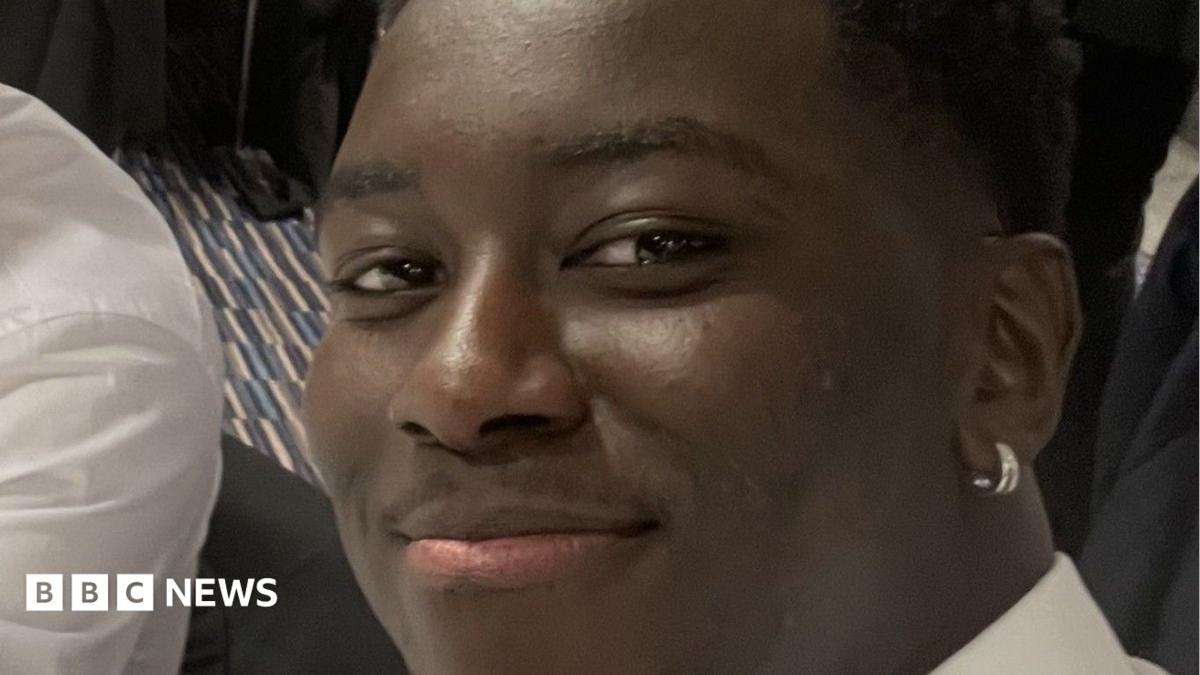
A man from north London who signed up to be a stem cell donor last year said he was initially hesitant but found the process "easy". Alfred Mureithi, 24, from Islington, is one of 29,000 people registered to be a stem cell donor - the highest number in three decades, according to the NHS Stem Cell Donor Registry. However, NHS Blood and Transplant (NHSBT) said more donors are needed, particularly those from ethnic minorities.
Stem cell donations can help people with blood cancers, blood disorders, immune deficiencies and genetic disorders when their bone marrow stops working properly or cannot produce healthy blood cells. Mureithi said he got a call about a match not long after signing up to be a donor. "It was a bit of a surprise, so soon, but I was excited," he said, adding that he had to have injections ahead of his donation which came with some side effects.
"I didn't sleep great and had some aches but just for a couple of days. "As soon as I donated I felt better." The donation itself, he said, was "a bit like a blood donation but a needle in each arm and it took a few hours". "I sat back, relaxed and let the staff do their thing – it was really easy," he said.
Mureithi was connected to an apheresis machine, a specialised medical device that draws blood from a donor, separates the stem cells from their blood and returns the remaining blood to their body. Guy Parkes, from NHS Blood and Transplant, said: "It is fantastic to see the continued growth of the NHS Stem Cell Donor Registry. "There is more to do, particularly to increase the diversity of the registry.
We want every patient who needs a stem cell transplant to have the best possible chance of finding a match." Explaining his decision to donate, Mureithi said: "I [didn't] have a reason not to." Listen to the best of BBC Radio London on Sounds and follow BBC London on Facebook , external , X , external and Instagram , external . Send your story ideas to hello.bbclondon@bbc.co.uk , external
Source: BBC